
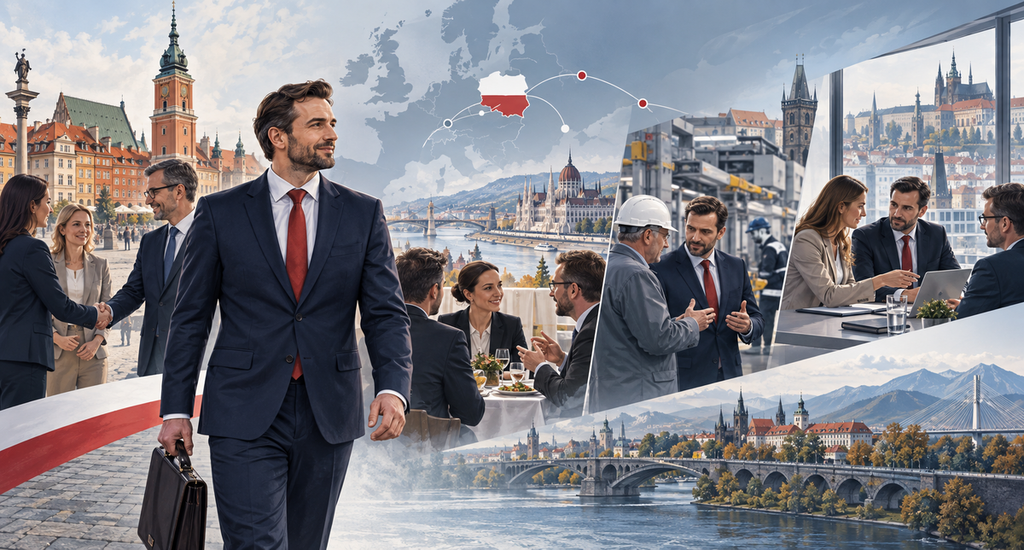
Cultural fluency is a prerequisite for business success in any international market. Nowhere is this more apparent than in Central and Eastern Europe (CEE), a region whose history, diversity, and traditions have shaped unique professional norms.
Poland, situated at the crossroads of Germanic, Slavic, and Baltic influences, embodies this cultural blend. It combines Western-style professionalism and punctuality with Central European warmth and formality. For executives and investors, mastering the subtleties of local etiquette is not simply a courtesy; it is a strategic advantage that can influence negotiations, partnerships, and long-term trust.
This article explores how business etiquette in Poland compares with neighboring markets, the Czechia, Slovakia, and Hungary, and provides actionable guidance for building credibility and effective relationships across the region.
Market Landscape
Professionalism and Politeness in Polish Business Culture
Polish business culture values professionalism, respect for hierarchy, and personal integrity. A firm handshake accompanied by direct eye contact remains the standard greeting in corporate settings. Introductions should use formal titles: “Pan” (Mr.) or “Pani” (Ms.), followed by the surname. Using first names is reserved for established relationships and should be initiated by the Polish counterpart.
Punctuality is highly regarded. Arriving late, even by a few minutes, may be perceived as disrespectful. Meetings tend to follow a structured agenda, with thorough preparation and detailed presentations expected. Decision-making may involve multiple layers of approval, reflecting Poland’s hierarchical organizational culture.
Dress codes are generally conservative and professional. Men typically wear suits and ties, while women opt for business dresses or tailored outfits. Even in creative or technology industries, formality is maintained during first encounters.
Gift-giving can be appropriate, especially during initial meetings or holidays. Small, tasteful gifts, such as books, local crafts, or an odd number of flowers (never even), are appreciated. Extravagant gifts, however, may raise ethical concerns.
Regional Comparisons: Czechia, Slovakia, and Hungary
While CEE countries share many cultural similarities, subtle distinctions matter.
- Czechia: Czech business culture values precision, logic, and modesty. Meetings are formal but may adopt a first-name basis sooner than in Poland. Data-driven arguments and succinct presentations are preferred. Humor, when used carefully, can help build rapport.
- Slovakia: Slovaks mirror much of Czech etiquette but may demonstrate slightly more deference to hierarchy, especially in traditional industries. Reliability and follow-through are crucial, and written documentation remains highly valued.
- Hungary: Hungarian business interactions often place greater emphasis on personal relationships and hospitality. Meetings might begin with extended small talk over coffee or a glass of pálinka. Storytelling and narrative communication styles are common, reflecting Hungary’s strong cultural traditions.
Across all four countries, trust and consistency underpin successful business relationships. Deals are rarely concluded after a single meeting; multiple interactions, often accompanied by shared meals, cultural events, or social invitations, build mutual understanding over time.
The Role of Communication and Documentation
CEE professionals generally favour a direct yet diplomatic communication style. In Poland, criticism is often softened with polite phrasing, while in the Czech Republic or Slovakia, frankness may be more acceptable in technical discussions. Written communication is expected to be clear, formal, and grammatically correct.
Documentation is critical. Agreements should always be confirmed in writing, whether through detailed contracts, official minutes, or email summaries. This preference reflects a broader regional emphasis on accountability and legal precision.
Language Considerations
English is widely spoken in business circles, especially in multinational environments. However, learning a few Polish phrases, such as “Dzień dobry” (Good morning) or “Dziękuję” (Thank you), demonstrates respect and effort. The same applies in neighboring countries, where local greetings are valued even when business is conducted in English.
Opportunities and Challenges
Opportunities
- Building Long-Term Partnerships – Poles value reliability and personal integrity. Consistently meeting commitments, even on small matters, strengthens reputation and opens doors to deeper collaboration.
- Differentiating Through Cultural Awareness – Demonstrating cultural fluency sets foreign companies apart. Adapting your approach to local etiquette, such as using titles properly or respecting formality, instills confidence among partners.
- Enhanced Negotiation Outcomes – Understanding non-verbal cues, communication styles, and hierarchy improves negotiation effectiveness. Knowing when to present data versus when to build rapport can determine success.
- Bilingual and Localized Materials – Offering bilingual contracts, presentations, and marketing materials shows professionalism and respect. It also reduces misunderstandings during complex transactions.
- Regional Expansion Synergies – By recognizing the subtle differences between Poland, the Czech Republic, Slovakia, and Hungary, businesses can replicate successful engagement models across multiple markets more efficiently.
Challenges
- Misinterpreting Formality – Western executives accustomed to informality may perceive Polish or Slovak formality as rigidity. In reality, it reflects respect and professionalism.
- Patience in Relationship Building – Decision-making often takes longer than in Anglo-American contexts. Impatience or pressure tactics may backfire.
- Navigating Historical Sensitivities – Avoid comparisons or comments about historical conflicts in the region, particularly between neighboring nations. Awareness of local history is essential for diplomatic communication.
- Balancing Formality and Familiarity – While initial meetings are structured, successful partnerships often evolve into warm personal relationships. Striking this balance requires sensitivity and timing.
- Managing Language Barriers – Even when English is used, idioms, humor, or tone can create misunderstandings. Professional interpreters are invaluable for high-stakes negotiations.
Partnering and Strategies
1. Prepare and Educate
Invest in cross-cultural training for executives and employees who interact with Polish or regional counterparts. Understanding etiquette, business hierarchies, and negotiation norms prevents costly missteps.
Before meetings, research attendees’ titles and roles. Learning correct pronunciation of Polish names demonstrates attention to detail.
2. Observe Formal Introductions
During introductions, shake hands firmly, make eye contact, and use full names with titles. Wait for the host to initiate a shift to first names. In group settings, greet the most senior person first.
3. Respect Hierarchies and Protocol
In Poland and Slovakia, hierarchies are acknowledged through communication and seating arrangements. Defer to senior leaders in discussions and allow them to open and close meetings.
When presenting business cards, do so with both hands, ensuring that your counterpart can read the card easily. Take a moment to look at their card before placing it neatly on the table.
4. Demonstrate Professional Courtesy
Poles appreciate thorough preparation and punctuality. Send an agenda in advance and follow up with concise meeting minutes afterward. Avoid aggressive negotiation tactics; instead, present logical, data-backed arguments and allow space for reflection.
5. Cultivate Relationships Outside the Office
Invitations to dinner, cultural performances, or even weekend excursions are integral to relationship building. Accept such invitations graciously, and reciprocate when appropriate. Small gestures of hospitality strengthen trust.
6. Communicate with Diplomacy
Direct confrontation is rare in Polish business settings. If disagreements arise, express them tactfully and focus on solutions. Avoid public criticism.
In contrast, Hungarian discussions may tolerate more open debate, while Czech executives often prefer factual, low-emotion exchanges. Tailor your tone to the audience.
7. Follow Through and Express Gratitude
Reliability is the foundation of reputation. Always deliver on promises, follow up promptly after meetings, and send thank-you notes or recap emails. Handwritten letters are appreciated for important partnerships.
8. Leverage Interpreters and Translators
For complex contracts or technical negotiations, hire professional interpreters or bilingual advisors. Avoid relying solely on machine translation for legal or financial documents.
9. Stay Informed and Culturally Sensitive
Keep abreast of regional politics and current affairs. Offhand remarks about governance, religion, or historical disputes can cause discomfort. Demonstrating informed neutrality conveys maturity and respect.
Illustrative Example
Consider a British logistics firm expanding into Poland and Hungary. In Warsaw, meetings begin punctually, with formal greetings and structured presentations. In Budapest, the same executives are invited to an informal dinner that includes lively conversation and cultural anecdotes.
By adapting communication styles to each environment, formal precision in Poland, relationship-driven warmth in Hungary, the company builds trust on both fronts. Within months, it secures contracts in both countries, illustrating how cultural adaptability translates directly into commercial success.
The Broader Perspective
Understanding etiquette is not merely about manners, it is about strategy and empathy. In Poland and its neighbors, success often depends less on the immediate deal and more on the relationship that supports it. Executives who navigate these nuances build sustainable networks, mitigate misunderstandings, and project credibility.
As Central and Eastern Europe continues to integrate economically, those who demonstrate respect for cultural detail will lead the way in forging partnerships that last.
How Expand2Poland Can Help
Expand2Poland bridges cultural and commercial gaps for international organizations entering the Polish and broader Central European markets.
Our partner network can help with:
- Cultural and etiquette briefings tailored to specific industries and countries.
- Cross-cultural training for executives and teams.
- Interpreter and translator coordination for meetings and negotiations.
- Introductions to vetted local partners across Poland.
- Advisory support for regional business expansion and relationship management.
By respecting regional customs and communicating effectively, we help your team build trust, avoid missteps, and establish enduring partnerships throughout Central and Eastern Europe.
The information provided in this article is for general informational and educational purposes only and does not constitute legal, financial, or tax advise.