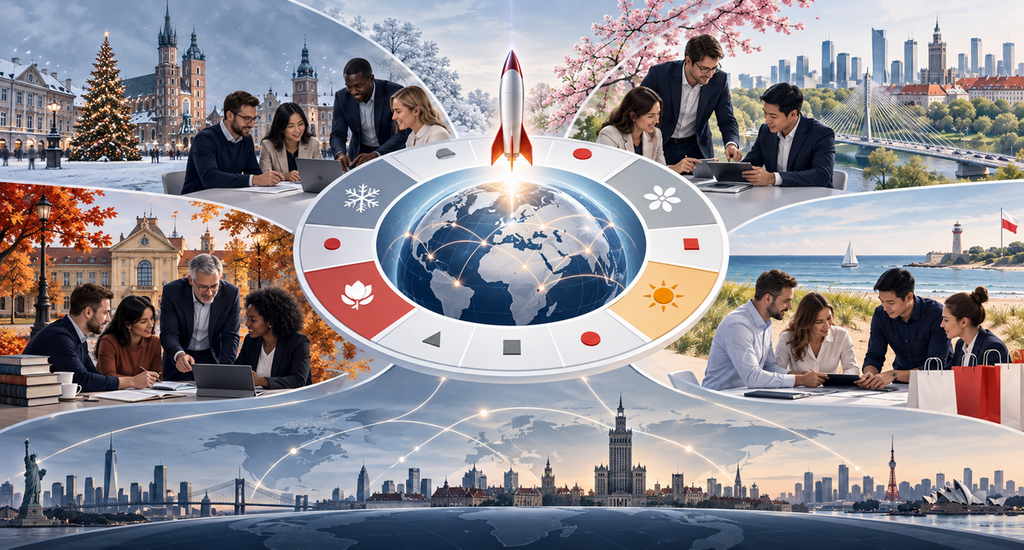
Timing can make or break a product launch. Even the most innovative offering risks underperforming if it enters the market at the wrong moment, when audiences are distracted, budgets are frozen, or key decision-makers are unavailable. For companies operating in Poland, understanding the country’s unique business rhythm is essential. And for global organizations, the challenge doubles: aligning Polish seasonality with international release cycles demands both cultural awareness and operational discipline.
Poland’s business calendar is shaped by public holidays, family traditions, seasonal patterns, academic schedules, and cultural observances that strongly influence consumer behavior and B2B activity. Companies that master these nuances position themselves to maximize engagement, media attention, and commercial success. Those that ignore them risk missed opportunities and reduced impact.
This expanded guide explores Poland’s business cadence in detail, highlights cultural patterns that influence timing, and provides practical frameworks for aligning local nuances with global launch windows.
Market Landscape: Understanding Poland’s Annual Business Rhythm
Public Holidays and Extended Breaks
Poland observes numerous public holidays throughout the year, and many of them generate extended downtime:
- Easter (Święta Wielkanocne) – A major family holiday, with Easter Monday also free from work. Businesses often slow down the week prior.
- May Holidays (“Majówka”) – Constitution Day (3 May) and Labor Day (1 May) frequently create one of the longest unofficial vacation windows of the year. Many employees take additional days off to bridge the gap.
- Corpus Christi – A Thursday holiday that often results in extended weekends.
- Assumption of Mary (15 August) – A summer public holiday when much of the country takes time off.
- All Saints’ Day (1 November) – A solemn observance where families visit cemeteries; business activity decreases.
- Independence Day (11 November) – National observances dominate the day.
- Christmas to New Year – From Christmas Eve onward, operations slow dramatically until early January.
These holidays affect consumer activity, corporate decision-making, staff availability, and media responsiveness, making them essential considerations for campaign timing.
Seasonal Trends
Several recurring patterns shape consumer and business behavior:
- January–February: Strategic planning and budgeting; low consumer spending after holidays.
- March–April: Increased activity leading into Easter; B2B momentum rises.
- May–June: High engagement before summer holidays; ideal for launches requiring strong media attention.
- July–August: Reduced staffing and slower decision cycles due to family vacations.
- September–November: Peak business period; strong B2B performance and back-to-school retail activity.
- December: Retail peak but low B2B responsiveness.
Understanding these cycles ensures campaigns align with periods of maximum availability and buying intent.
Cultural and Social Events
Poland has numerous celebrations that influence marketing potential:
- Children’s Day (1 June) – A major consumer holiday relevant to family, education, entertainment, and retail brands.
- Women’s Day (8 March) – Highly observed; ideal for campaigns focused on women’s products or workplace initiatives.
- St. Andrew’s Day (30 November) – Popular for entertainment and lifestyle campaigns.
- Back-to-school season (late August–early September) – A major retail cycle.
These events offer opportunities for culturally relevant messaging that resonates with local audiences.
Academic and Corporate Calendars
Academic schedules influence staffing and purchasing cycles, particularly in university cities like Kraków, Wrocław, Poznań, and Warsaw:
- Exam periods: January–February and June.
- Summer break: July–September, reducing student workforce availability.
- Semester starts: Fresh cohorts bring shifts in demand for housing, technology, food services, and lifestyle products.
Corporate Poland largely follows a calendar-year fiscal cycle, meaning:
- Budget planning: September–December.
- Budget approvals: January.
- Procurement cycles: Often restart in Q1.
Launches requiring B2B contracts, tenders, or software procurement should avoid late-year budget freezes.
Opportunities and Challenges
Opportunities
- Align with peak engagement windows: Timing launches in March–June or September–November maximizes responsiveness.
- Use cultural events to boost relevance: Campaigns tied to Women’s Day, Children’s Day, All Saints’ Day traditions, or local seasonal behavior often outperform generic messaging.
- Plan global drops strategically: Global announcements can be synchronized so that Polish teams activate local messaging during their highest-traffic hours.
- Leverage analytics tools: Engagement data helps identify which days of the week and hours of the day yield the best conversion rates.
- Optimize internal workflows: Calendar mapping improves cross-departmental collaboration and prevents bottlenecks due to vacations or holiday closures.
Challenges
- Misaligned global timing: A New York-based launch at 9 AM may hit Poland after work hours, reducing immediate engagement.
- Holiday clashes: Launching on 3 May, 15 August, or during Christmas season results in low B2B response.
- Seasonal downtime: Summer and late December periods drastically reduce media and corporate decision-making.
- Local vs. global budget cycles: If global budgets release in Q4 but local budgets restart in Q1, campaign resources may be misaligned.
- Cultural mismatch: Without local adaptation, global campaigns risk appearing tone-deaf to Polish norms and rhythms.
Partnering and Strategic Actions
1. Build a Shared Global–Polish Master Calendar
Create an integrated calendar that includes:
- Polish public holidays
- Seasonal slow-downs
- Cultural observances
- Corporate fiscal cycles
- Internal milestones
- Global launch windows
Circulate it to marketing, product, operations, HR, and leadership teams to synchronize planning and prevent conflicts.
2. Time Launches for Cross-Market Overlap
Digital campaigns work best when the target markets share overlapping working hours. Recommended approach:
- Schedule press releases or social media drops during Poland’s midday to ensure visibility in both Europe and early U.S. time zones.
- For Asia-focused launches, early-morning Poland time can create overlap.
3. Localize Campaigns Around Polish Traditions
Culturally resonant examples include:
- Children’s Day → family products, entertainment, education, retail
- Women’s Day → wellness, workplace initiatives, promotions
- All Saints’ Day → sensitive, respectful content; avoid loud or celebratory messaging
- Back-to-school → tech, clothing, stationery, food
Localization amplifies emotional connection and increases organic engagement.
4. Plan Around Workforce Availability
Internal readiness is key. Companies should:
- Avoid major launches during “Majówka” week (late April/early May) or mid-August.
- Track vacation schedules to ensure adequate personnel.
- Use quieter periods, such as late July, for internal projects like training or system upgrades.
5. Leverage Analytics for Continuous Improvement
Analyze:
- Email open rates
- Social media engagement
- Website traffic patterns
- Conversion times
- Past campaign performance
Use these insights to refine future launch windows.
6. Strengthen Communication Between Global and Local Teams
Establish structured processes for:
- Local input on global launch timing
- Translation and cultural adaptation
- Approval workflows that account for Polish holidays
- Real-time adjustments based on local market behavior
This avoids rushed campaigns or missed opportunities.
How Expand2Poland Can Help
Expand2Poland helps international companies master the complexity of Poland’s business calendar. Our partner network can help your organization:
- Map public holidays, seasonal patterns, and cultural observances
- Identify optimal product launch windows for Polish audiences
- Synchronize global release cycles with local market behavior
- Build internal planning calendars and cross-departmental workflows
- Provide cultural insights that strengthen messaging and engagement
With the right timing strategy, companies can ensure their launches land with maximum impact across both Polish and global markets.
The information provided in this article is for general informational and educational purposes only and does not constitute legal, financial, or tax advise.