Customer experience (CX) has become one of the fiercest battlegrounds in modern retail. For Polish consumers shaped by both European trends and local expectations, a great experience is no longer a bonus, it’s the deciding factor that determines loyalty, repeat purchases and brand advocacy.
As competition intensifies across supermarkets, fashion chains, electronics stores and online marketplaces, retailers must learn to anticipate what customers value at each step of the journey. While Poland shares many global CX trends, local nuances, cultural expectations and regulatory frameworks give the market its own distinct character.
This article explores what exceptional CX looks like in Poland, the opportunities and frictions shaping customer expectations and the strategies that help retailers stand out.
Market Landscape: A Retail Environment Defined by Convenience, Trust and Omnichannel Expectations
Polish retail is diverse and highly developed. Large shopping centers dominate urban areas, discount chains continue to thrive, independent boutiques maintain niche loyalty, and e-commerce has experienced rapid growth across all demographics.
Across this landscape, several patterns shape how Polish shoppers evaluate brands:
Convenience remains king, but adapts to the Sunday Ban – Since the implementation of the Sunday trading ban, the definition of convenience has shifted. “Extended hours” now specifically means maximizing availability on Friday evenings and Saturdays to capture demand before the weekly closure. Consequently, customers place a premium on efficiency: they expect optimized store layouts and ultra-fast checkouts to navigate the intensified crowds during these compressed shopping windows.
Price matters, but value matters more – Poles are price-sensitive, especially in times of inflation, but they increasingly scrutinize product quality, ingredients and sustainability claims. Promotions drive traffic, yet shoppers also reward transparency and ethical sourcing.
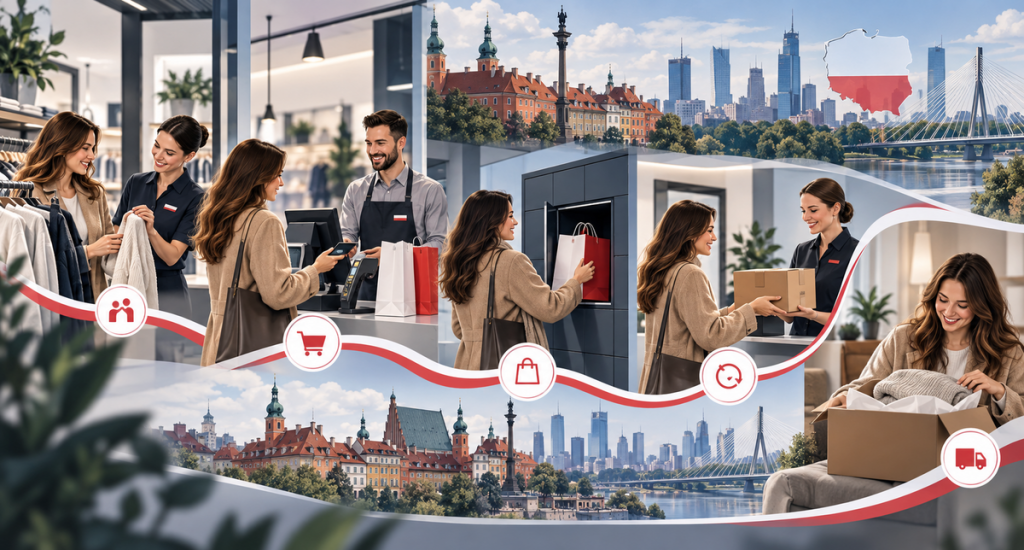
Omnichannel became the norm, not an experiment – The pandemic accelerated click-and-collect, locker pickup and curbside services. Polish consumers now see these options as standard features rather than premium conveniences.
Delivery expectations are high and rising – Fast, cheap (or free) delivery with real-time updates is now table stakes for online retailers. Customers expect flexible returns and dislike hidden costs.
Service quality varies widely – Some retailers invest heavily in staff training and digital tools; others lag behind, resulting in inconsistent experiences. Online reviews often highlight service gaps, ranging from poor product knowledge to slow complaint handling.
Tourism and expatriates expose language gaps – In large cities, multilingual service is increasingly expected, yet many stores still struggle to support non-Polish speakers effectively.
Underlying all of this is strong consumer protection legislation: shoppers are used to clear return rights, warranty rules and refund procedures. Brands that do not honor these expectations quickly damage trust.
Opportunities and Challenges: Where CX Creates Advantage and Where It Falls Apart
Retailers that invest in customer experience in Poland can unlock powerful competitive advantages, especially in markets where differentiation is difficult.
Opportunities for Retailers Who Get CX Right
- Personalization drives engagement – Using purchase history, browsing behavior and loyalty data allows retailers to tailor recommendations, offers and product assortments, a practice Polish customers increasingly value.
- Multiple delivery and pickup options widen appeal – Next-day delivery, parcel lockers, in-store pickup and flexible return points reflect the diversity of Polish shopping habits.
- Knowledgeable staff boost conversion – Shoppers expect employees to understand products, stock availability and alternatives; well-trained staff directly influence sales.
- Store ambience influences brand loyalty – Clean, modern store design, thoughtful lighting, curated layouts and interactive kiosks elevate the shopping experience.
- Technology enhances efficiency – Self-checkout, mobile apps, virtual try-ons and inventory visibility tools streamline journeys without sacrificing service.
Challenges Retailers Must Confront
Balancing affordability with high-level CX investments remains a constant tension. Polish retailers operate in a competitive, price-sensitive market where margins are tight. Meanwhile, integrating customer data across online and offline channels often requires significant technology upgrades and process changes.
Managing returns, especially in fashion and electronics, adds operational strain. Although personalization is promising, it raises data protection questions under GDPR, requiring careful consent management and transparency.
Finally, building consistent CX across franchises, partners or outsourced delivery networks remains one of the most difficult operational challenges for brands expanding across Poland.
Partnering and Strategies: Building CX That Wins Hearts and Drives Revenue
Creating exceptional customer experience in Poland requires a structured approach that blends data, training, technology and empathy.
Start With the Customer Journey
Map every touchpoint, online discovery, in-store browsing, checkout, fulfilment, returns and post-purchase support. Identify friction points and moments of delight. This mapping provides the blueprint for improving CX systematically.
Leverage Technology Without Losing Human Touch
CRM tools help centralize customer data and personalize marketing. Mobile apps must be intuitive and fast. Websites should load quickly and be optimized for mobile-first audiences. Technology should enhance, not replace, human expertise, store associates remain essential for guidance and trust-building.
Strengthen Omnichannel Integration
Polish shoppers move fluidly between digital and physical environments. Retailers should:
- Allow online purchases to be returned in-store
- Enable real-time inventory visibility
- Support consistent pricing and promotions across channels
Seamless transitions between touchpoints create the sense of a unified brand experience.
Invest in People and Training
Product knowledge, customer service etiquette and problem-resolution skills are critical differentiators. Regular training helps staff handle informed customers and builds a culture where service excellence is the norm.
Listen Closely and Respond Quickly
Reviews, surveys, social media comments and customer support tickets contain valuable insights. Retailers should act on this feedback promptly, especially complaints, which Polish shoppers expect to be resolved transparently and fairly.
Ensure Clarity in Policies and Compliance
Return, refund and warranty policies must be:
- Clearly displayed
- Easy to understand
- Fully compliant with Polish consumer law
Failure to meet these standards erodes trust and can create legal exposure.
How Expand2Poland Can Help
Expand2Poland partners with retailers to build customer experience strategies that resonate with Polish shoppers. Our network of partners can help with:
- Mapping and optimizing omnichannel customer journeys.
- Selecting and implementing CRM tools suited to the Polish market.
- Training retail staff in customer service, product knowledge and communication.
- Designing loyalty programs and personalization frameworks.
- Developing CX dashboards and performance metrics.
- Conducting competitive analysis and customer insight research.
With our support, retailers create experiences that feel personal, trustworthy and distinctly tailored to Polish consumer expectations, driving loyalty, repeat purchases and sustainable growth.
The information provided in this article is for general informational and educational purposes only and does not constitute legal, financial, or tax advise.