
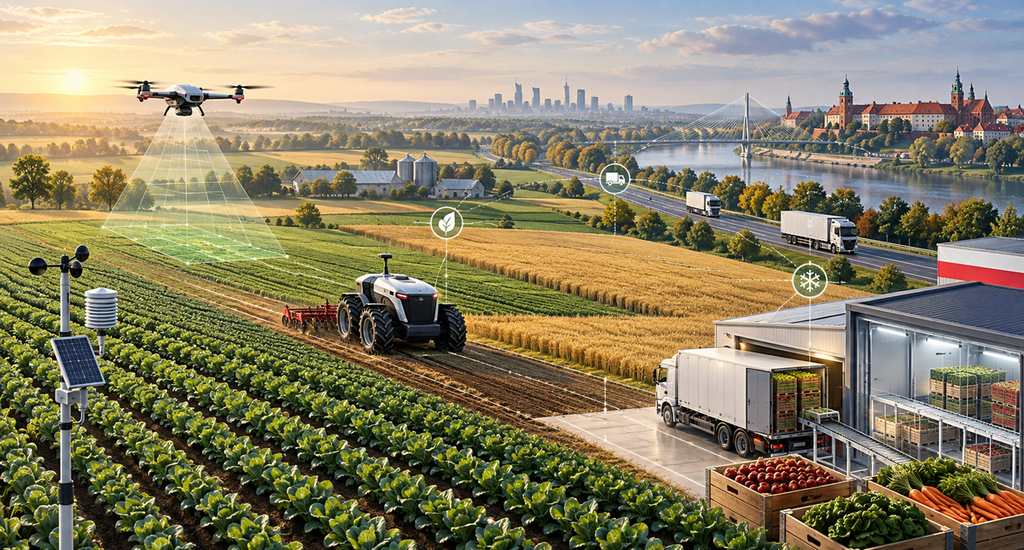
Poland’s agricultural sector is among the largest in the European Union, producing grains, potatoes, poultry, and dairy products for both domestic consumption and international export. Historically reliant on smallholder farms, the sector has undergone rapid modernization in the past two decades. Today, agritech solutions are transforming how Polish farmers manage crops, livestock, and supply chains.
Start-ups, research institutes, and established companies are leveraging digital tools and advanced machinery to increase yields, reduce environmental impact, and strengthen traceability. For investors and foreign firms, Poland’s agritech sector offers both scale and dynamism, making it an increasingly attractive market for technology adoption and partnership.
This article explores the technologies shaping Polish agriculture, the investment landscape, and the opportunities and challenges of participating in this evolving ecosystem.
Smart Farming Technologies
Agritech innovation in Poland spans multiple domains, each addressing pressing challenges in productivity, labor, and sustainability.
Precision Agriculture
Drones and satellite imagery now provide farmers with granular data on soil moisture, nutrient levels, and crop health. With these insights, fertilizers and pesticides can be applied precisely where needed. Benefits include:
- Reduced chemical use and environmental impact.
- Improved crop yields through targeted interventions.
- Cost savings from optimized resource use.
Precision agriculture has been especially impactful in Poland’s grain-producing regions, where large-scale fields are well-suited to aerial mapping and automated input application.
IoT Sensors
Wireless sensors deployed in barns, greenhouses, and open fields monitor conditions such as temperature, humidity, and soil pH. Connected to automated irrigation and ventilation systems, they allow real-time adjustments that improve both plant growth and animal welfare.
For example:
- In poultry farms, IoT sensors regulate ventilation and feed distribution, reducing disease risk.
- In greenhouses, automated irrigation systems maintain optimal growing conditions year-round.
Farm Management Software
Cloud-based platforms integrate data from sensors, machinery, and weather services into unified dashboards. These tools enable farmers to:
- Plan planting and harvesting schedules.
- Track inputs and compliance with sustainability standards.
- Forecast yields and manage financial performance.
Such systems are increasingly adopted by cooperatives, which consolidate data across member farms for collective optimization.
Robotics and Automation
Labor shortages and rising wages are accelerating interest in robotics. Prototypes and early deployments include:
- Autonomous tractors capable of ploughing and seeding fields without drivers.
- Milking robots that improve animal welfare and reduce reliance on manual labor.
- Automated harvesters adapted to Polish crops such as potatoes and apples.
Collaborations between Polish research institutions and start-ups are focused on adapting global technologies to local conditions, such as heavy soils or fragmented land holdings.
Supply Chain Transparency
Innovation in agritech extends beyond primary production into logistics and consumer engagement.
Blockchain and QR Codes
Traceability systems based on blockchain or digital QR codes track food from farm to table. Benefits include:
- Verification of product origin and production methods.
- Protection against food fraud and counterfeiting.
- Stronger consumer trust, especially for export markets with strict standards.
For example, some meat and dairy producers in Poland now provide QR codes on packaging, enabling consumers to view details about farm practices, transport, and processing facilities.
Investment Landscape
While software and fintech dominate headlines, agritech in Poland is quietly becoming a high-growth sector.
Drivers of Investment
- Large agricultural base: With nearly half of Poland’s territory dedicated to agriculture, the addressable market is substantial.
- Skilled engineers: Strong STEM education provides a talent pool for developing agritech solutions.
- Cost competitiveness: Development and deployment costs remain lower than in Western Europe.
FDI and Venture Capital
Foreign direct investment and venture capital are flowing into Polish agritech, particularly in:
- Agri-software start-ups building SaaS platforms for farm management.
- Hardware innovators developing sensors and automation solutions.
- Sustainability-focused ventures targeting EU Green Deal compliance.
Poland’s 19% corporate tax rate, combined with incentives such as R&D relief and Polish Investment Zone (PIZ) exemptions, further enhance returns for investors.
Strategic Partnerships
Collaboration with cooperatives and large agricultural enterprises accelerates technology adoption. Cooperatives play a central role in Poland’s farming structure, pooling resources and spreading innovation across hundreds of small farms.
Regulatory and Infrastructure Considerations
Poland benefits from strong logistics infrastructure, vital for agricultural exports:
- Road and rail networks link production areas to EU markets.
- Seaports in Gdańsk and Gdynia enable grain and food exports to Scandinavia, the UK, and beyond.
- Cold chain logistics are expanding, supporting perishable goods like dairy and poultry.
Regulatory Environment
Businesses must comply with EU and Polish regulations governing:
- Pesticide use and maximum residue levels.
- Animal welfare standards.
- Data protection when deploying IoT sensors and cloud-based platforms.
Alignment with EU frameworks provides predictability but requires continuous monitoring, as sustainability regulations tighten under the EU Green Deal.
Opportunities and Challenges
Opportunities
- Digitalization of Farming Growing demand for data-driven tools creates opportunities for SaaS providers, IoT developers, and drone operators.
- Sustainability and ESG EU policies reward innovations that reduce emissions, conserve water, or promote biodiversity. Investors can align agritech ventures with ESG priorities.
- Export Competitiveness Poland’s role as a major food exporter provides a ready market for traceability and quality assurance technologies.
- Collaborations with Cooperatives Partnering with cooperatives enables scale adoption across thousands of farms simultaneously.
Challenges
- Fragmented Land Ownership: Many small farms lack capital for high-tech solutions, requiring tailored business models.
- Adoption Barriers: Farmers may be hesitant to invest in unfamiliar technologies without clear ROI.
- Training Needs: Effective deployment often requires farmer education and ongoing support.
- Regulatory Complexity: Navigating pesticide, environmental, and data rules adds compliance costs.
Partnering and Strategic Actions
To engage effectively in Poland’s agritech ecosystem, companies should:
- Identify Niche Applications Focus on technologies that solve pressing local challenges, such as crop-specific harvesting or greenhouse automation.
- Engage with Cooperatives Pilot projects with cooperatives provide proof-of-concept and scale adoption.
- Leverage Universities and Institutes Collaborate with institutions such as Warsaw University of Life Sciences or Poznań University of Life Sciences for R&D partnerships.
- Utilize Incentives Apply for PIZ exemptions, R&D relief, or EU Green Deal funds to offset costs.
- Build Trust with Farmers Offer training, financing options, and clear ROI demonstrations to overcome adoption hesitancy.
- Promote ESG Alignment Position solutions as enablers of sustainability to tap into EU funding and consumer-driven demand for ethical products.
The Future of Agritech in Poland
Several trends will shape the sector in the coming years:
- Increased automation to offset labour shortages.
- Expansion of traceability systems as consumer demand for transparency grows.
- Integration of AI and big data into farm management software.
- Green innovation to meet EU climate goals.
- International collaboration with investors and technology providers from Western Europe, Israel, and the US.
Poland’s agritech ecosystem is poised to become one of the most dynamic in CEE, balancing traditional agricultural strength with modern technological solutions.
How Expand2Poland Can Help
For agritech innovators and investors, navigating Poland’s agricultural landscape requires local knowledge and trusted networks. Expand2Poland bridges the gap between technology providers and the farming community by:
- Connecting innovators with growers, cooperatives, and agribusinesses.
- Assisting with pilot projects to test and scale new technologies.
- Supporting logistics and export integration for global distribution.
By working with Expand2Poland, companies can position themselves at the forefront of Poland’s agritech transformation, delivering solutions that improve productivity, sustainability, and competitiveness.
The information provided in this article is for general informational and educational purposes only and does not constitute legal, financial, or tax advise.