Inflation is one of the most influential forces shaping investment decisions. It affects everything from consumer demand and wage pressures to interest rate policy, asset valuation and long-term portfolio strategy. For foreign investors considering Poland, understanding the country’s recent inflation dynamics is crucial for assessing stability, planning risk exposure and identifying emerging opportunities.
Poland’s inflation trajectory over the past few years has been unusually volatile. After decades of relative price stability, the country experienced one of the most significant inflation surges in Europe during the early 2020s, followed by a rapid disinflationary trend as monetary policy tightened and global shocks eased. This pattern reflects both global factors, such as energy price spikes and supply chain disruptions, and domestic fundamentals like labor market tightness and strong household demand.
By examining how Poland reached this turning point and what comes next, investors can form a clearer picture of the market’s resilience and the strategic options available across sectors.
The Arc of Inflation: From Crisis Peaks to Stability
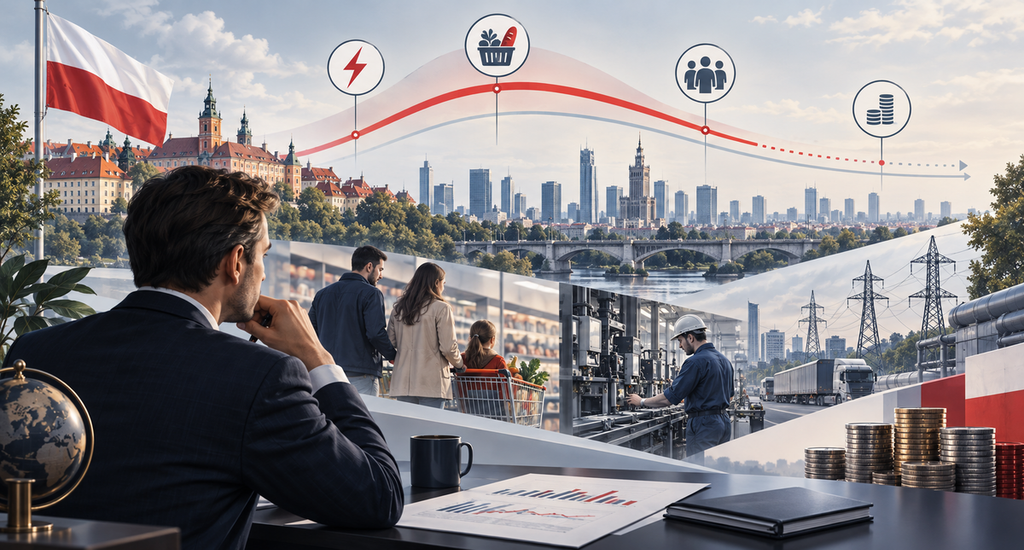
Poland entered the pandemic period with moderate inflation and a healthy macroeconomic outlook. However, the combination of global supply chain breakdowns, rising energy prices, fiscal stimulus and strong consumer spending pushed inflation sharply higher. The spike was dramatic: annual inflation reached over 14 percent in 2022, one of the highest levels in the European Union.
Several specific forces contributed to that surge. Energy markets were under extraordinary strain due to geopolitical tensions, including disruptions linked to the war in Ukraine. Global shipping delays and material shortages raised costs across manufacturing, construction and retail. Meanwhile, households emerging from lockdowns unleashed pent-up demand, pushing prices higher in categories ranging from food to consumer electronics.
The turning point came as international energy prices moderated, the Polish central bank aggressively tightened monetary policy and supply conditions gradually normalized. GUS’s annual-average national CPI inflation fell from 14.4% in 2022 to 11.4% in 2023 and 3.6% in 2024. These are annual averages, not monthly inflation peaks.
This rapid decline reflects a combination of policy discipline and structural resilience. Inflation expectations have begun to stabilize after a turbulent period, and wage growth, while still elevated, has started to reconnect with productivity trends. Yet inflation in Poland remains somewhat higher than in the eurozone average, a reminder that domestic demand remains strong and labor shortages continue to put upward pressure on wages.
What These Trends Mean for Investors
For companies evaluating opportunities in Poland, shifting inflation dynamics carry significant implications. Falling inflation can ease financial pressures and encourage expansion, but the transition from high to moderate inflation has strategic consequences that businesses must consider.
Monetary policy is one of the most immediate channels through which inflation affects investment conditions. As inflation comes under control, the Polish central bank gains room to reduce interest rates. Lower borrowing costs tend to stimulate investment, improve corporate cash flow, and support sectors like construction, real estate and consumer finance. For foreign investors relying on debt financing, a reduced interest rate environment can significantly improve project feasibility.
Currency dynamics also become more predictable when inflation is stable. The Polish zloty has historically exhibited periods of volatility, especially during global risk-off events. Declining inflation typically supports currency stability, making cross-border contracts, profit repatriation and long-term planning easier. Businesses still benefit from hedging strategies, but the overall environment becomes more manageable.
Asset pricing tends to shift as inflation falls. During high inflation, real estate and commodities often outperform as investors seek hedges against rising prices. As inflation normalizes, bond yields adjust downward and equity valuations can rise as discount rates fall. Investors in Polish real estate may find that stabilizing inflation supports stronger demand for both residential and commercial properties, while equity investors may see opportunities in industries benefiting from lower financing and input costs.
Labor markets represent another important factor. Poland’s labor market remains tight, even as inflation cools. Wage demands may soften, but employers must still offer competitive compensation to attract skilled talent, especially in high-value sectors like IT, advanced manufacturing and logistics. Companies should not assume that falling inflation alone will resolve workforce constraints; talent strategy remains a critical part of operating in Poland.
Risks and External Pressures That Could Shape the Outlook
Although inflation has receded substantially, risks remain. Energy markets are a key area of vulnerability. European economies are still adjusting to shifts in natural gas supplies, and any new geopolitical tensions, such as disruptions in the Middle East or renewed instability in Eastern Europe, could create fresh price shocks. Poland’s energy mix relies heavily on imports, making the country sensitive to global market movements.
Supply chain fragility is another factor that could reintroduce inflationary pressure. While bottlenecks have eased, longer-term challenges persist, such as limited availability of key industrial components, rising transportation costs, or changes in Asia-Europe trade routes. Companies operating in sectors like automotive, machinery and electronics should maintain contingency plans for disruptions.
Another scenario investors should consider is that inflation could overshoot on the downside. A very rapid drop in inflation sometimes reflects weakening domestic demand or softening business confidence. While this is not the dominant trend in Poland, companies should still stress-test cash flow projections against a range of macroeconomic outcomes, including slower GDP growth or a temporary cooling of consumer behavior.
In addition, global monetary policy divergence can influence Poland indirectly. If major central banks tighten or loosen policy at different speeds, capital flows into emerging European markets can shift, affecting currency stability and financial conditions in Poland.
How Companies Can Navigate an Evolving Inflation Environment
Preparedness and adaptability are essential for companies operating in an inflation-sensitive landscape. Foreign investors entering Poland should integrate inflation considerations into pricing, supply chain, financing and labor strategies. Local firms must do the same to safeguard margins during transition periods.
Financial modeling is a critical starting point. Companies should build scenarios that incorporate varying inflation paths, interest rate adjustments and exchange rate impacts. This modeling can guide decisions on capital expenditure, debt refinancing and cost structure optimization.
Supply chain resilience remains a priority. Firms should review their dependency on single suppliers or vulnerable trade routes and explore diversification where feasible. Local sourcing, strategic inventories and flexible contracting can help mitigate inflationary shocks linked to logistics or external markets.
Pricing strategies may need updating as inflation normalizes. During high inflation, frequent price adjustments are normal; as stability returns, customers expect more consistency. Businesses should consider adopting dynamic pricing mechanisms, volume-based discounts or long-term contracts indexed to moderate inflation measures.
Labor management is equally important. Competitive salaries still matter, but companies can relieve wage pressure by investing in automation, digitization and employee upskilling. Improving productivity helps offset rising labor costs and supports long-term resilience.
Finally, investors should pay close attention to government policy. As inflation approaches target levels, Poland may shift focus toward stimulating investment, supporting innovation or encouraging industrial diversification. Incentives for R&D, energy transition, or digital transformation may become more prominent. Investors who align with these priorities can benefit from supportive fiscal conditions.
How Expand2Poland Helps Investors Navigate Uncertainty
Expand2Poland works with international investors to interpret Poland’s economic trends and translate them into practical strategies. Our partners monitor inflation dynamics, monetary policy decisions and macroeconomic risks to provide timely, actionable insights. We help companies assess how inflation affects financing, pricing, supply chain design, contract negotiation and long-term market entry strategy.
By combining economic analysis with on-the-ground business knowledge, Expand2Poland ensures that investors maintain stable margins and competitive positioning even in periods of volatility. Our guidance empowers clients to anticipate risks, rather than merely reacting to them, and to make confident decisions in one of Central Europe’s most dynamic markets.
The information provided in this article is for general informational and educational purposes only and does not constitute legal, financial, or tax advise.