
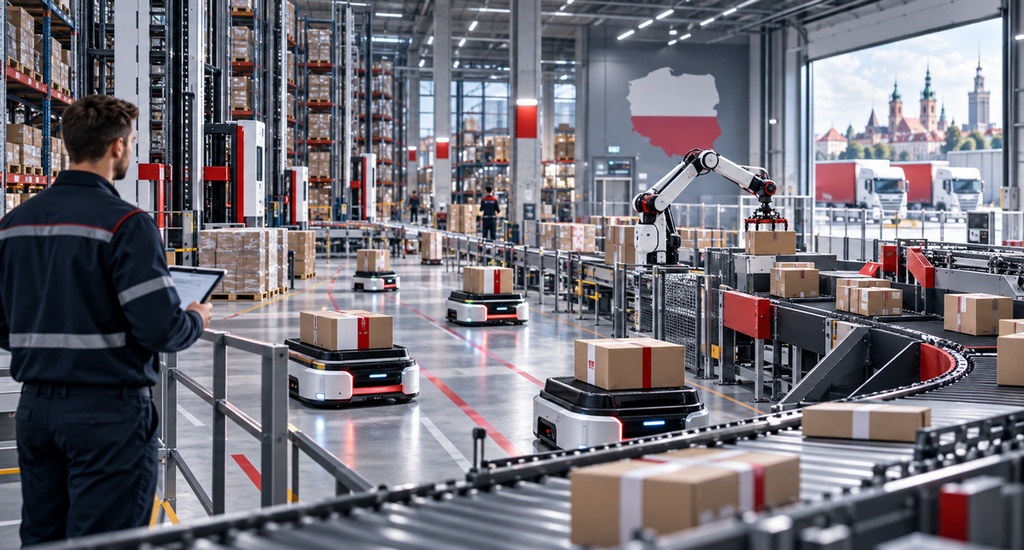
Warehouse automation can help a Polish operation handle growth, improve accuracy or reduce time spent moving goods. The strongest investment starts with a clear understanding of the warehouse and the problem to solve. Order profiles, layout, data and integration all influence which technology will be useful.
A company may benefit from a targeted process change, partial automation or a larger installation. Comparing these options against the same service requirements gives the investment a sound commercial basis.
Understand the current operation
Measure normal and peak throughput, order mix, product dimensions, inventory accuracy and picking errors. Include inbound work, replenishment and returns so the assessment covers the complete flow.
Observe where employees wait, walk or repeat tasks. Layout, stock data or inconsistent procedures may explain a bottleneck that equipment alone would struggle to resolve. Improving these foundations can also make later automation more effective.
Agree the service standard and growth assumptions. A system needs sufficient peak capacity, with a financial case that reflects how often that capacity will be used.
Match the technology to the work
Goods-to-person systems can reduce travel by bringing stored items to workstations. Their fit depends on storage characteristics, replenishment and the exceptions the warehouse must handle.
Mobile robots can support movement between defined points. Assess floor conditions, traffic, charging and interaction with people, and ask for demonstrations with representative loads.
Conveyors, pick-to-light and sortation may address narrower parts of the process. Software improvements can also help where data is reliable and the recommendations can be put into practice. Compare the contribution of each option before choosing the scale of installation.
How do you assess the return on warehouse automation?
Compare achievable operating improvements with the full cost of installation and continued use. Include equipment, building changes, software, integration and implementation downtime. Training, maintenance, licenses, spares, energy and the internal operating team also belong in the budget.
Use measured changes in capacity, errors, paid hours or service reliability to estimate benefits. Explain whether staff time would be removed from the cost base or redeployed to other tasks. This distinction makes the expected return easier to assess.
Model a slower ramp-up and lower volumes alongside the base case. If funding support is relevant, review the actual call, applicant conditions and timing with a specialist. A clear base case distinguishes confirmed financing from possible support.
Plan integration and safety during procurement
Map connections with warehouse management, enterprise systems, equipment controls and customers. Assign responsibility for data, testing, defects and future changes. Successful delivery requires the whole workflow to operate together.
Ask the integrator and safety specialists to define responsibilities for the assembled installation, conformity documentation and safe use. The European Commission's machinery guidance distinguishes the current Machinery Directive from the Machinery Regulation applying from 20 January 2027. Confirm the rules relevant to the equipment and placement date.
Review worker data and any monitoring with appropriate privacy specialists. Operational information should have a clear purpose and proportionate access controls.
Test the conditions that matter
Agree an acceptance checklist before contracting:
- Throughput: the representative order mix and normal or peak volumes.
- Accuracy: the errors to measure and the acceptance threshold.
- Availability: operating periods and how downtime is recorded.
- Recovery: how work continues during failure and restarts afterward.
- Integration: the data and interfaces included in the test.
- Responsibility: who runs the tests, records defects and approves acceptance.
Define the operating assumptions and measurement method so the supplier and warehouse team can assess the same result.
Include replenishment, returns, oversized products and exceptions. Test how work continues during an outage and how the system recovers afterward. These conditions help reveal support and continuity needs before the installation becomes critical.
Prepare employees for changed tasks and technical responsibilities. Training, maintenance coverage and escalation contacts are central to reliable operation.
Use results to guide further investment
Compare actual performance with the starting baseline. Explain gaps, distinguishing temporary ramp-up issues from design limits. Expand when the evidence supports the next stage.
For the wider facility assessment, see logistics parks in Poland.
How Expand2Poland can help
Expand2Poland supports partner and supplier sourcing in Poland. We help clarify provider-selection criteria and coordinate relevant introductions and comparison discussions around your warehouse requirements.
Book an introductory consultation to discuss the operating problem, potential supplier needs and technical assessments required for the next stage.
This article provides general information and does not constitute legal, financial or tax advice. Engineering and machinery-safety decisions require qualified specialist review.